
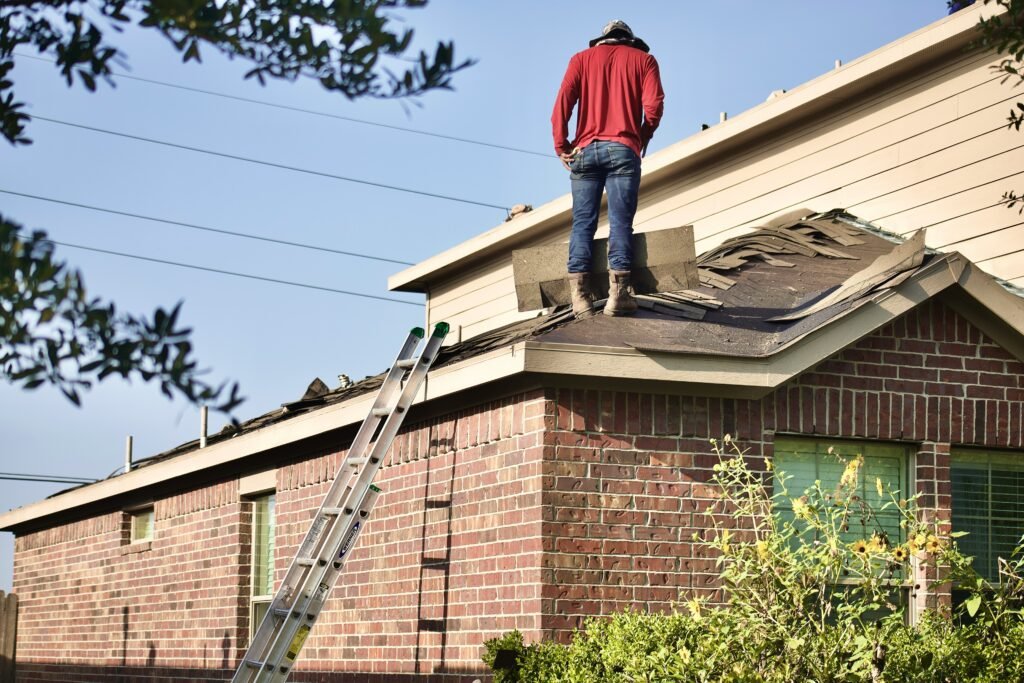
Key Takeaways
- A roof functions as an integrated system, far more than the visible surface.
- The scope of replacement depends on roof components, material type, and conditions verified during assessment.
- A worn look or a single leak does not, by itself, prove that full replacement is required.
- Detailed assessment and roof work should be handled by qualified professionals.
What Roof Replacement Means
A roof is a system, more than a cover
A roof protects a home through connected layers that work together. The roof deck forms the structural base that carries everything above. An underlayment sits on that deck as a continuous water-management layer. The roof cover, whether shingles, panels, tiles, slates, or a membrane, sheds most rain, snow, and sun. At the eaves, edge components such as fascia and drip edge guide runoff away from the structure and protect the deck edge. Flashings create formed transitions where the roof meets walls, chimneys, skylights, or other penetrations. Any replacement discussion treats this assembly as a coordinated system because performance depends on how parts interact, not just on the condition of the outer surface.
Replacement, recover, and repair are distinct paths
These terms refer to different approaches. Replacement usually involves removing the existing cover, addressing damaged substrate discovered during the process, and installing a new cover. Recover means placing a new cover over an existing cover. Repair targets a defined issue in a limited area or component, such as replacing a damaged section of cover or renewing a specific flashing. Each path carries its own considerations. Replacement opens the system, allowing closer inspection of connected layers. Recover leaves the original layer in place while adding another cover. Repair focuses on a specific problem zone. A professional evaluation helps determine which path fits the roof’s conditions instead of treating these options as interchangeable.
Scope depends on what the assessment confirms
A replacement discussion starts with visible information and expands to what must be verified. Surface clues, including wear, missing pieces, or notable patterns, raise questions about adjacent or underlying layers. The assessment may evaluate whether the underlayment still functions, how edges and terminations have performed, and whether intersection flashings remain effective. It can also consider roof geometry and penetrations that shape water paths. No single symptom sets the final scope. As more information is gathered, the professional explains options and outlines what the proposed work will include and exclude based on the roof’s design and on-site findings.
What Can Be Included in a Roof Replacement Scope
The existing roof cover and the roof deck below
The visible cover often frames the initial scope because it absorbs the most weather and sunlight. Patterns such as widespread wear, isolated impact marks, or displacement may point to places where water has lingered or entered. The roof deck matters just as much because it supports the assembly, influences attachment, and affects how a new cover will perform and resist loads. During replacement, concealed deck issues sometimes become visible and can be addressed. Not every project requires deck work, and a worn cover does not automatically signal deck deterioration, but both layers inform how a professional defines project boundaries.
Underlayment, edges, and flashing details
Beneath the cover, underlayment adds a secondary water-management layer. Over time, exposure at gaps or terminations can affect its condition, which is why replacement planning often considers what lies under the cover. Edges at eaves and rakes collect runoff and face wind, putting stress on terminations. Flashing details at step transitions, roof-to-wall interfaces, and penetrations sit along the same water path. These formed components guide water around changes in plane. A replacement scope may include evaluating and, if needed, addressing these details so the system performs as intended with the new cover.
Penetrations, valleys, skylights, and roof-to-wall areas
Intersections concentrate water and movement, so they often become distinct scope items. Valleys carry flow from multiple planes. Skylights and vent penetrations rely on properly formed, integrated flashing. Roof-to-wall areas combine surfaces that expand and contract at different rates, which can stress sealant lines or flashing laps over time. These zones usually warrant a specific plan within the larger replacement discussion to clarify what will be examined and the anticipated level of work. The aim is not to assume deficiency, but to recognize that these areas experience different service demands than broad field areas and may shape the overall scope.
Connected components that may need evaluation
Roofs interface with gutters, downspouts, wall claddings, rooftop equipment, and curbs for skylights or mechanical units. Scope varies with roof design, material, and the way these elements meet the edge or surface. Some components remain serviceable and stay in place. Others may need work to function with a new cover or to maintain intended water paths at transitions. A qualified assessment identifies which connected elements matter to the project goals. This does not mean every adjacent component is replaced. It does mean the plan should acknowledge ties between the roof and nearby features so the final scope clearly states where work starts and stops.
Roof Replacement Context by Material
Asphalt-shingle roof replacement
Asphalt-shingle systems are common on steep-slope homes and typically include deck, underlayment, shingles, and flashings. Planning usually distinguishes among repair, full replacement, and recover. As defined in manufacturer and industry literature, replacement removes the existing cover and addresses substrate issues before installing a new cover; recover adds a new cover over an existing one; repair targets specific locations. Each roof is evaluated on its own. Conditions such as how flat existing shingles lie, visible sagging, or the deck’s condition influence whether a recover is even considered. Surface wear patterns like granule loss or curling show aging context but do not alone decide the path. A professional frames options based on findings, geometry, and overall system condition.
Low-slope membrane roof replacement
Low-slope roofs often use membrane systems that perform as continuous sheets tied together by seams and flashings. Replacement planning is system specific. The discussion may address the membrane’s surface condition, seam integrity, and transitions at parapets, curbs, and penetrations. The substrate, including the deck and layers below the membrane, may be evaluated along with the effects of thermal cycling and wind. Drainage, including how water leaves the roof, forms part of the picture, yet design decisions reside within professional practice rather than as homeowner instructions. Because components in many low-slope systems function as one waterproofing assembly, scope is commonly defined by contiguous areas and details instead of isolated shingle-sized patches.
Metal roof replacement
Metal systems vary widely. Through-fastened panels differ from standing seam systems that use concealed clips. Panel profiles, seam types, and component joints all influence how a replacement plan is shaped. Fasteners and seams operate under demanding conditions that include thermal movement, sustained water exposure, and possible chemical or environmental compatibility concerns. Corrosion resistance and the surrounding environment, such as marine air or industrial contaminants, can affect what is examined and what makes it into scope. A professional assessment considers whether visible issues stem from panel condition, fastener performance, or transitions. The discussion emphasizes system interactions and long-term performance without prescribing specific products or attachment details in this overview.
Clay and concrete tile roof replacement
Tile roofs pair a durable, often heavy cover with underlayment and flashing that protect the deck beneath. Clay and concrete tiles can be displaced or broken in storms, exposing underlayment and sheathing. These materials typically weigh several times more than common asphalt coverings. Industry guidance often cites about three times as a useful magnitude reference, so roof framing and sheathing require professional structural consideration. Tiles are also more brittle than many covers and can be affected by windborne debris. Replacement discussions often consider whether underlayment and flashings have reached the end of their service life even when tiles appear serviceable, and whether the structure was designed for tile loads. These are professional questions that tailor scope to the specific roof.
Slate, historic, and specialty roof replacement
Slate and specialty roofs often contribute to a building’s architectural character. Under the right conditions, slate can last for many decades, potentially approaching 150 years. On historic properties, guidance commonly favors repair or in-kind replacement that maintains appearance and design intent. In these contexts, the conversation places added weight on matching materials, preserving visible patterns, and verifying that suitable replacements are available and compatible. Because the roof may be a defining feature, the assessment addresses design and visibility as well as weather protection. A specialist can determine whether issues are limited and repairable or whether larger areas need work, and how to approach matching so the roof’s character remains consistent where it matters most.
Conditions That Can Shape a Replacement Discussion
Repeated water entry or multiple affected areas
A single leak tells a different story than recurring water entry. When stains or drips appear repeatedly or across separate rooms, planes, or slopes, the scope conversation may need to extend beyond a small patch. That pattern does not automatically call for full replacement. It does prompt questions about why water is reaching interior surfaces more than once or in more than one area. Possible explanations include aging at several transitions, widespread surface wear, or non-roof moisture sources that mimic roof leakage. The professional uses patterns, timing, and locations to outline what portions of the roof system require attention to stop the symptom and which concerns lie outside a roof-only solution.
Widespread weathering versus localized damage
Sun and temperature swings age materials, often creating general surface changes across a roof, while isolated impacts or wind effects produce localized issues. Granule loss, curling, thermal unsealing, and fastener backup are weathering-related contexts that can appear across many shingles or panels. Hail or debris may leave limited-area marks that can be purely aesthetic or functional, which requires qualified differentiation. The aim is to separate age-related wear from newer damage and to determine whether an issue is cosmetic or affects water shedding. Because visuals alone are not definitive proof of underlying integrity, they are treated as clues to verify. This approach keeps scope tied to function and system performance instead of surface appearance alone.
Underlying layers and roof geometry
Roofs with many planes, valleys, or penetrations introduce more transitions and seams. Each of those points relies on underlying layers to manage water as direction changes. The deck supports the system, and the underlayment provides a secondary water path. Complex geometry increases the number of these interactions. A replacement discussion asks whether recurring symptoms cluster near particular transitions and whether underlying layers in those zones belong in scope. This is not a decision for the homeowner to make; it is context for understanding how geometry and concealed layers influence a professional’s scope, especially if conditions suggest issues are not limited to the outer surface.
Material age, past repairs, and visual matching
The age of the cover and any visible prior repairs shape planning. Older materials weather differently from new ones, which affects how well a partial replacement or repair blends with adjacent areas. Availability of matching materials, especially for discontinued lines or specialty roofs, can also influence the project description. None of these realities automatically justify full replacement. They do set expectations for appearance and performance and may guide a professional toward larger-area work for uniformity or targeted work that accepts some contrast. Clear discussion of the homeowner’s priorities for appearance versus function helps align the final scope with both condition and preference.
Roof-Like Problems That a Replacement May Not Resolve Alone
Ice dams and winter water entry
In cold climates, winter water entry can occur even when the cover remains intact. Ice dams form when snow is on the roof, upper surfaces are above freezing, and lower edges are below freezing. Meltwater can back up behind the ice and move under the cover to interior finishes. The symptom can look like a roof failure, yet the driver is a seasonal condition that affects how water sits and moves near the eaves. A professional assessment that considers roof design and seasonal factors can distinguish ice dam effects from roof system deficiencies. Understanding this mechanism prevents assuming a new cover alone will resolve a condition tied to winter dynamics.
Attic or interior moisture conditions
Interior moisture can imitate a roof leak. Condensation on cold surfaces, moisture migration through the enclosure, or plumbing and mechanical sources can create stains or odors that resemble water entry from above. Because the roof is part of a larger enclosure, moisture pathways may bypass the roof and still appear on ceilings or upper walls. A qualified evaluation considers both the roof and interior context to avoid attributing every stain to the cover. The goal is to identify the actual moisture path before defining scope. That approach keeps a replacement plan focused on roof-specific issues while acknowledging that building moisture can produce roof-like symptoms a new cover would not necessarily solve.
Adjacent walls, windows, and penetrations
Water can enter at claddings, windows, wall penetrations, or trim and then travel to a location that looks like a roof problem. Roof-to-wall intersections are common meeting points where enclosure layers depend on proper transitions to manage water. If staining or dampness appears near these interfaces, the assessment may need to include adjacent assemblies, not just the roof. This broader view prevents a roof-only scope from leaving nearby pathways unresolved and sets realistic expectations about included work. A roof replacement can address the roof side of a transition; if the source is in the wall or window system, that may require a separate plan coordinated with the roof work.
When a Roof Replacement Assessment Needs Prompt Attention
Active water entry or visibly displaced materials
Ongoing water entry, dripping, or spreading ceiling damage calls for prompt professional attention. So do displaced materials that expose underlying layers. These conditions do not define the final scope or cause, but they do suggest the situation can worsen if left alone. A qualified roofer can document what is occurring and explain immediate risk containment options within professional practice. The homeowner’s role is to recognize that continued exposure can expand the affected area and complicate eventual repair or replacement. Early evaluation clarifies priorities and separates urgent stabilization from longer-term planning.
Storm-related changes and unsafe conditions
After severe weather, changes on a roof warrant qualified evaluation. Hail can cause both cosmetic blemishes and functional damage, and pre-existing wear may resemble storm effects. High winds can shift materials or stress edges and transitions. Conditions that appear unsafe, including partially detached components or debris strikes, deserve quick professional review. Ground-level photos of what is safely visible can be helpful to share, but a complete assessment belongs to trained personnel. The objective is to sort what is new from what is old and decide what belongs in a replacement plan versus targeted repair or stabilization.
Recurring stains, persistent odors, or suspected concealed moisture
Stains that return, musty odors, or dampness that seems to migrate can indicate moisture moving behind finishes. These clues support involving a professional to determine whether the roof is the source, a contributor, or unrelated to the moisture path. Because concealed moisture can evolve, waiting may allow damage to spread beyond the initial area. A careful assessment separates roof issues from other building sources and clarifies whether a roof replacement scope would address the conditions or whether additional interior or enclosure work is needed by separate specialists.
Extensive water damage, contaminated water, or broad visible-growth context
Moisture control is central to preventing mold. Guidance indicates that items dried within about 24 to 48 hours after a leak or spill will, in many cases, avoid mold growth. When water damage is extensive, when water may be contaminated, such as by sewage, or when visible mold appears over an area larger than roughly 10 square feet, professional involvement is recommended. These thresholds speak to health and safety more than roof scope. They signal when a roof assessment should be coordinated with specialists who handle interior moisture or contamination while roof professionals evaluate the roof itself. The aim is to manage risk, define responsibilities, and avoid assuming a roof-only project can resolve all consequences of water exposure.
Questions to Ask During a Roof Replacement Assessment
What component or condition is driving the scope?
Ask which part of the system appears to drive the proposed work and whether the issue is limited to the cover, connected to flashings or edges, or linked to underlying layers. Clarify whether the plan addresses performance, appearance, or both. Request examples of observations supporting the scope and where the professional expects to verify conditions once work begins.
Which parts of the roof system are being evaluated?
Ask how the assessment addresses the deck, underlayment, edges, and transitions in addition to the outer surface. Confirm which intersections or penetrations are included. Request an explanation of how the roof’s geometry guides the evaluation and how adjacent components such as skylights or wall claddings factor into defining project boundaries.
How does roof material affect the assessment?
Ask how the material category, whether asphalt shingles, low-slope membranes, metal panels, tile, or slate, changes what the professional looks for and how scope is framed. Request clarification about common age-related patterns versus indicators of damage for that specific material. Confirm whether matching or availability issues might influence decisions about partial versus larger-area work.
What observations are useful to document safely?
Ask which kinds of photos or notes from accessible vantage points help provide context, such as general location, date, time, and weather when symptoms appear. Confirm what information the professional prefers to receive before the site visit and how that information will guide the assessment without replacing an in-person evaluation.
Frequently Asked Questions
What does roof replacement usually include?
Replacement typically involves removing the existing cover, addressing any damaged substrate discovered during the process, and installing a new cover. A project may also include work at underlayment, edges, and flashing transitions if the assessment indicates those components belong in scope. Not every replacement includes the same items. The exact scope depends on roof design, material, and conditions found when work begins and as concealed layers become visible.
Is roof replacement different from a roof recover?
Yes. Replacement removes the existing covering before installing the new cover and creates an opportunity to address substrate issues. A recover adds a new covering over the existing one. Each roof needs individual evaluation to determine whether recover is even appropriate. Factors such as how the existing cover lies, deck condition, and overall system performance influence that decision. A qualified roofer can explain which path is under consideration and why.
Can a roof be replaced without changing every roof component?
Often, yes. A plan can focus on the cover and specific details while leaving serviceable components in place. For example, certain flashings or connected elements may not require work if they function correctly and are compatible with the new cover. Conversely, the assessment may show that particular underlying layers or transitions should be addressed at the same time. The final scope should clearly state what will be replaced, repaired, or left as is, based on professional findings.
Do metal, tile, and asphalt roofs have different replacement considerations?
They do. Asphalt-shingle systems often center on shingle condition, underlayment, and flashing details and may include a recover versus replacement discussion. Metal systems vary by panel type, seam design, and fastener approach; considerations include seams, corrosion, and environmental compatibility. Tile systems introduce weight and fragility considerations along with underlayment and flashing longevity. Each material has distinct aging patterns and typical transitions, which is why assessments are material specific.
Can ice dams or interior moisture affect a roof replacement decision?
Yes. Ice dams can produce wintertime water entry that resembles a cover failure, and interior moisture from condensation or other sources can mimic roof leaks. If symptoms trace back to these conditions, a new cover alone may not address the root cause. A professional can determine whether the roof is the source, a contributor, or a bystander and can outline which parts fall within a replacement scope versus what requires separate attention.
When should a roof be assessed by a professional?
Seek a qualified assessment when there is active water entry, visible displacement of roof materials, storm-related changes, recurring stains or odors, or any suspicion of concealed moisture. Conditions involving extensive water damage, contaminated water, or widespread visible growth are further reasons to coordinate with professionals. Timely evaluation helps distinguish roof-related issues from other moisture sources and frames a scope that addresses function, appearance, and safety.
The Bottom Line
A roof replacement decision is not a conclusion drawn from one symptom or a generic checklist. It relies on a professional, system-focused evaluation of how the deck, underlayment, cover, edges, and flashings work together, and how transitions and penetrations influence water paths. Material type, roof design, and connected components shape what is examined and what may be included in scope. Visible wear, isolated impact marks, or a leak are valuable clues, yet they do not alone establish the need for replacement or define the full extent of work. The strongest plans grow from clear questions, safely gathered documentation, and a qualified evaluation that explains what will be replaced, what will be repaired, and what the proposed scope is intended to achieve.