
Key Takeaways
- Heavy rain functions like a stress test, increasing runoff and wind pressure so small gaps or marginal details may leak only during storms.
- Areas that fail most often include valleys, roof-to-wall intersections, edges, chimneys, skylights, vents, step flashing, counterflashing, and missing or misaligned kickout flashing.
- Water can migrate along underlayment, sheathing, framing, and walls, so a stain or drip may appear far from the actual entry point.
- New stains, active dripping, ceiling damage, or musty odors after storms suggest you should consider a qualified roof or building assessment.
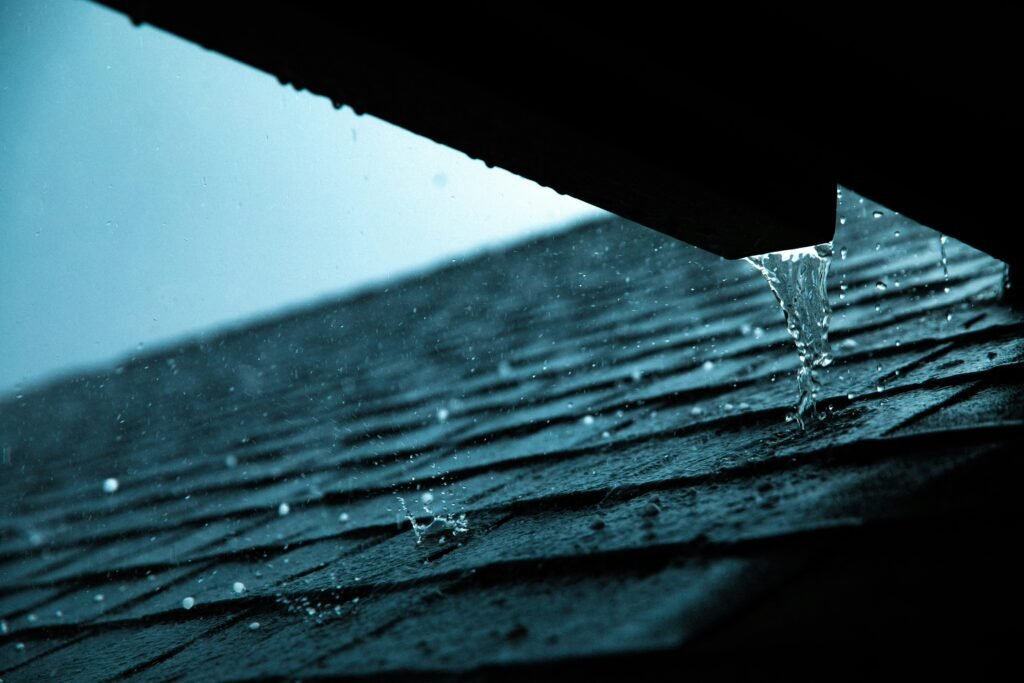
During a downpour, water behaves differently around your home. Far more runoff hits the roof at once, and wind often drives water sideways or uphill into places a light shower never reaches. That surge in volume and pressure can expose weak points at flashing, roof-to-wall intersections, valleys, penetrations, gutters, and drip edges, and it can also force water along hidden paths within the roof assembly. The damp spot you notice indoors is often a symptom, not the origin, because water can travel along underlayment, sheathing, framing, and finishes before it appears.
Treat the roof as a coordinated water-management system rather than a simple layer of shingles. Shingles or panels, flashing, underlayment, roof edges, penetrations, gutters, and downspouts must work in sequence to shed, redirect, and drain water. If any one piece is undersized, worn, misaligned, or interrupted, a storm can overwhelm the intended path and send water into the building instead of away from it.
What Makes Heavy Rain Different From a Light Shower?
Higher runoff volume reaches the roof at once
Roof coverings are designed to shed water, not hold it. In light rain, water follows predictable paths to edges, valleys, and gutters. In a downpour, the same surfaces receive a surge of water in a short time. Valleys carry concentrated flow, gutters fill quickly, and details that handle a drizzle can be overloaded. When capacity is exceeded, water can back up at edges, spill at transitions, splash onto siding, and work into seams that normally stay dry.
Wind can change the direction of water
Wind-driven rain can arrive nearly sideways and be pushed uphill along shingles, into laps, and against vertical surfaces. That pressure moves water into capillary gaps and at flashing terminations where gravity alone would not carry it. Even intact shingles and sound siding can admit water at transitions that depend on lapped drainage, particularly on shallow slopes or in tight inside corners.
Flashing and Roof-Wall Intersections Are Common Trouble Spots
Why valleys, sidewalls, and roof edges matter
Where roof planes meet or change direction, water concentrates. Valleys gather runoff from two slopes into one channel. Sidewalls and headwalls mark where a roof meets a vertical wall. These zones rely on metal flashing to lift water over seams and send it into open drainage paths. If flashing is missing, damaged, or poorly integrated with shingles and wall coverings, stormwater can slip behind exterior finishes and travel within the assembly before it shows up indoors.
How step flashing, counterflashing, and kickout flashing manage water
Step flashing is a sequence of overlapping metal pieces where a sloped roof meets a wall, forming a shingle-like staircase that returns water to the roof surface. Counterflashing covers the top edges of step flashing at masonry or other wall finishes to protect the joint. At the bottom of a roof-to-wall intersection, kickout flashing acts as a diverter that sends concentrated water into the gutter instead of down the siding. During heavy rain, flow along that junction is intense. If step flashing has insufficient overlap, if counterflashing fails to cover the top edges, or if the kickout is missing or undersized, water can dump behind cladding. Inside the home, this may appear as a ceiling-corner stain, a damp upper wall, or a drip at a window head that looks like a window problem even though the source is the roof-to-wall transition.
Wind-Driven Rain Can Reach Places Gravity Alone Does Not Test
Shingle overlaps and exposed transitions
Shingles, tiles, and metal panels shed water by overlapping one another. In calm rain, water flows downhill over those laps. With strong wind, rain can be pushed upslope into joints. Areas such as ridge vents, off-ridge vents, hip and ridge caps, and roof-to-wall joints are sensitive because they depend on overlapped geometry. On shallow slopes, wind-driven rain has more time to interact with the surface, which raises the chance of intrusion at joints that are usually protected.
Chimneys, skylights, vents, and other penetrations
Penetrations interrupt the roof covering and require dedicated flashing. Chimneys commonly use step flashing along the sides, head flashing uphill, and counterflashing at masonry. Skylights rely on factory-supplied components and careful field integration. Vent stacks and exhaust hoods use seals and flashings that must lap correctly with shingles. In heavy, windy rain, water can collect behind a chimney or skylight and be pushed sideways into joints. Older sealants and gaskets may not withstand that pressure, so a minor interior drip might appear only when wind and rain arrive from a particular direction.
Gutters and Drainage Can Change Where Rain Goes
Overflow at eaves and roof edges
Gutters and downspouts form part of the roof drainage system. Under intense rain, debris or undersized components can cause water to overflow the front lip or back up against the fascia. Water can then be driven behind the gutter, wetting fascia boards and roof edges. If the drip edge or underlayment is not well integrated, that overflow can reach the roof deck or a wall cavity.
Valleys, downspouts, and concentrated discharge
Valleys can dump large amounts of water into a short run of gutter, and a single downspout may serve a significant area. In heavy rain, combined flow can overwhelm carrying capacity, especially near outlet corners. If water cannot exit fast enough, it can surge backward at the outlet, splash into soffits, or pour over at a joint. Downspouts that discharge onto lower roofs can also create secondary floods on lower shingles, which then retest lower transitions and flashing.
Underlayment, Sheathing, and Hidden Water Movement
The roof assembly has more than one water-control layer
Shingles or tiles are the primary water-shedding surface, but other layers influence leaks. Underlayment beneath the covering provides a secondary barrier. Flashing ties the covering to walls and penetrations. The roof deck, underlayment laps, and fastener penetrations can temporarily store, redirect, or release water depending on installation and age. In light rain, small imperfections in laps or fastener placement may not matter. In heavy rain, water may back up, ride capillary paths under laps, or find a misaligned seam that only leaks under load.
Why water travels along decking and framing
Wood-based products such as plywood and oriented strand board (OSB) can move liquid water laterally for short distances along seams and surfaces. Framing members often become the route drips follow because water clings to them and runs to a low point. Insulation can slow drying and spread moisture across a wider area of ceiling, creating diffuse stains that do not pinpoint the source. Patterns and timing offer clues, though they are not a diagnosis by themselves.
Aging Materials and Previous Work May Make the Leak Intermittent
Weathered coverings, sealants, and flashing
Sun, temperature swings, and time affect roofing materials. Shingles lose granules and become brittle. Sealants at flashing joints can dry and crack. Metal flashing may corrode, dent, or shift slightly with building movement. As margins shrink, a joint that once had comfortable overlap can become vulnerable in a storm that pushes water harder than usual.
Installation details and earlier repairs
Roofs are assemblies, and sequence matters. If a detail was installed out of order or a repair treated symptoms without reintegrating flashing and underlayment, the system may hold in light rain but fail when stressed. Common examples include step flashing tucked behind siding but not lapped correctly with underlayment, a missing kickout at a wall intersection, or a patch that depends heavily on sealant. Heavy rain is more likely to expose those limits.
Could Condensation or Air Movement Be Part of the Problem?
How attic moisture can resemble a roof leak
Not all moisture that appears after a storm comes from direct rain entry. Warm, humid indoor air can move into a cool attic or roof cavity and condense on the underside of the roof deck, especially when a storm cools the roof quickly. That condensation can drip onto ceilings and mimic a leak. In some homes, bathroom fans or dryer vents that terminate in attic spaces add humidity that condenses during weather swings, adding to the confusion.
Why storm timing alone does not prove the exterior cause
If water shows up right after a storm, rain entry is a reasonable suspect, but it is not the only mechanism. A storm can bring temperature drops and pressure changes that alter air movement, and it can raise outdoor humidity. A professional may look for signs that distinguish liquid leaks from condensation, such as water tracks at penetrations or flashing versus uniform frost or widespread dampness on the underside of the deck.
Indoor Signs to Watch for After a Downpour
Ceiling stains, drips, and changing patterns
After heavy rain, look for new ceiling discoloration, damp drywall seams, or slow drips. Compare size and location with previous storms. A growing stain or a new drip point suggests a developing path. If the leak stops soon after the storm ends, that points toward a capacity or wind-driven event rather than a continuous opening.
Walls, insulation, framing, and musty odors
Check upper walls and room corners for dampness or bubbling paint. Listen for dripping in wall cavities. Musty odors that appear after storms and fade later can indicate intermittent wetting. If you can view an attic safely from an access point, darkened sheathing near roof-to-wall intersections, around chimneys, or below valleys may suggest where water has traveled. Keep observations within safe limits and avoid entering confined or wet spaces.
Documenting the timing without climbing onto the roof
Record the storm date and time, wind direction if known, approximate rainfall intensity, and the interior location and size of any moisture. Photos of stains over time help establish a pattern. Ground-level exterior photos of gutters, downspouts, and walls during or after the storm can capture overflow paths without leaving the ground.
When Is a Professional Roof Assessment Appropriate?
Situations that warrant prompt attention
Seek a qualified assessment if you see active dripping, new or expanding ceiling stains, staining at roof-to-wall intersections, dampness around a chimney or skylight, recurring leaks tied to storm direction, or musty odors after heavy rain. After severe weather, it is also reasonable to have the system reviewed for displaced flashing, damaged coverings, or drainage issues.
What a qualified assessment may examine
A roofing or building professional may check roof-to-wall intersections for proper step flashing and kickout flashing, inspect valleys and penetrations for correct lapping, and evaluate underlayment exposure at edges. They may also review gutters and downspouts for alignment, damage, or clogging, and consider how upper roofs discharge onto lower roofs. Indoors, they may trace moisture pathways, evaluate attic conditions, and look for concealed damage. The aim is to identify the water path and the specific detail that fails during heavy rain.
Safe observation boundaries for homeowners
Roof falls are a real hazard. Keep observation to interior spaces and ground level. You can document symptoms, note storm timing, and observe general conditions from the ground. Leave roof access, testing, and repairs to qualified professionals with the equipment and training needed to work safely.
Frequently Asked Questions
Why does my roof leak only when rain is very heavy?
Heavy rain increases water volume and often brings wind that pushes water into joints and transitions. Together, those forces can overwhelm marginal flashing, roof-to-wall intersections, valleys, edges, penetrations, or gutters. The roof may seem fine in light showers because the flow is not high enough to expose the weakness.
Can gutters cause a roof leak during a storm?
They can contribute. If gutters or downspouts overflow or back up under heavy flow, water can be driven behind the gutter and into fascia or wall assemblies. Concentrated valley discharge can also overwhelm a section of gutter. The result indoors can look like a roof leak even though the path began at the eave or wall.
Can wind-driven rain enter even when shingles look intact?
Yes. Wind can push rain sideways or upward into overlaps, against flashing, and around penetrations. Intact shingles matter, but wind-driven rain tests details differently than calm, gravity-driven flow.
Does a ceiling stain always mean the roof is leaking directly above it?
Not necessarily. Water often travels along sheathing, framing, or finishes before it becomes visible. The source can be several feet away or at a different elevation, such as a roof-to-wall intersection or valley.
Should I replace the whole roof if it leaks only during heavy rain?
Not by default. Scope depends on the roof’s age, overall condition, and whether the issue is isolated to a flashing detail, drainage path, or specific component. A qualified assessment can determine whether targeted repairs or broader work make sense.
Bottom Line
A roof that leaks only during heavy rain usually signals that a specific detail is reaching its limit under stress. The cause often involves flashing at roof-to-wall intersections, valleys, chimneys, skylights, or vents, and may include gutters and downspouts that change where water goes during downpours. Wind-driven rain can force water into places gravity alone would not test, and once inside, water can move along hidden paths before you see a stain or drip. Because symptoms rarely appear directly under the entry point, approach the issue as a system problem. Watch for patterns tied to storm intensity and wind direction, keep observations within safe limits, and consider a professional assessment if leaks recur or track with specific storm conditions. Addressing the path early helps protect the structure and reduces the risk of concealed damage.